A vehicle is private property, but when it enters public space it is no longer only a private object. It moves among other people, occupies streets, blocks entrances, uses public roads, creates risks, and can affect the lives of strangers. For this reason, society already imposes many duties on vehicle owners: registration, insurance, roadworthiness checks, taxes, parking rules, speed limits, and traffic laws.
There is one more duty that modern states should consider: every vehicle owner should be reachable through the license plate, without revealing their identity or personal data.
This does not mean that anyone should be able to discover who owns a car. It does not mean that a citizen should enter a license plate number and receive the owner’s name, address, or phone number. That would be dangerous and unacceptable.
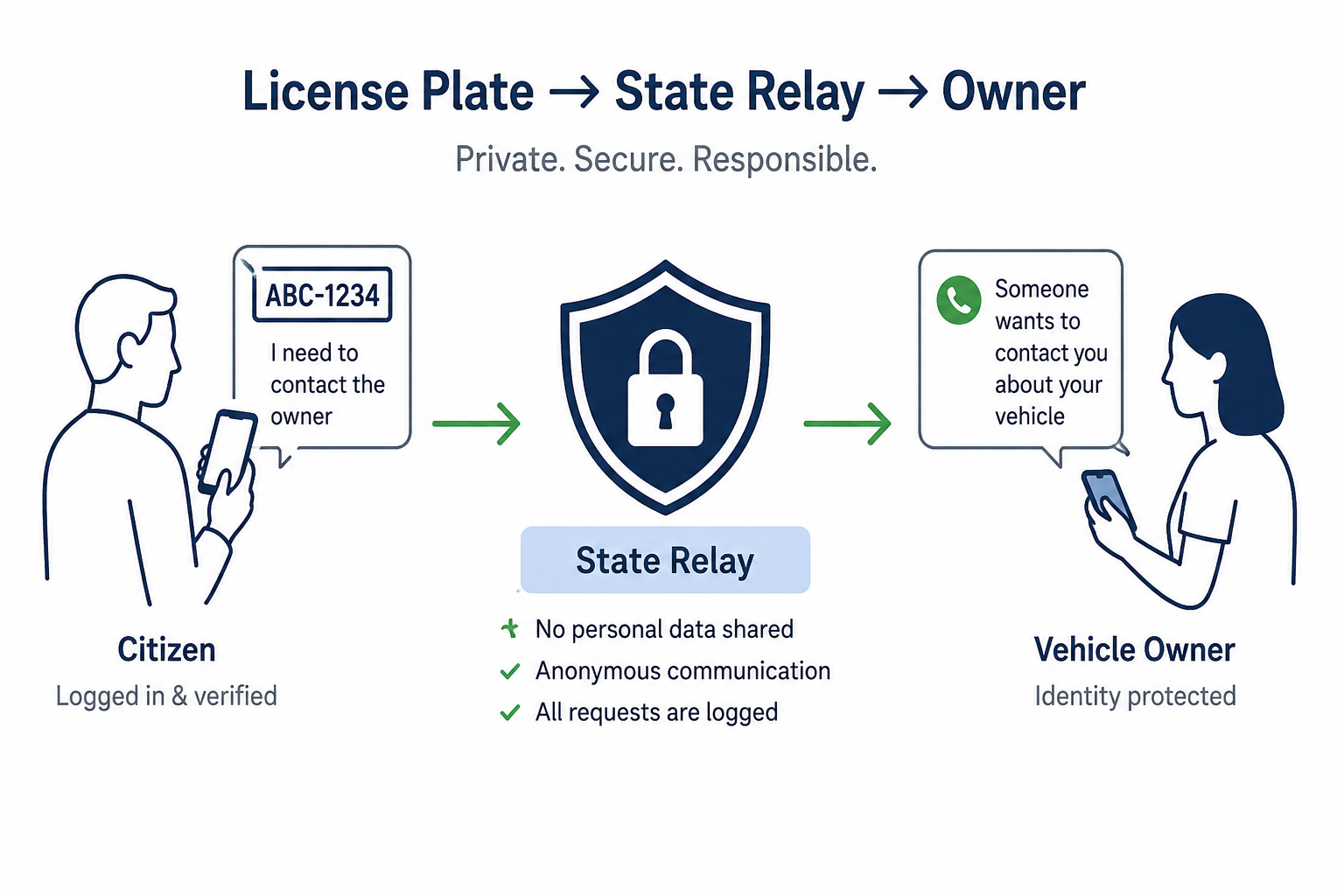
The idea is different. The state should create an official communication relay. A citizen enters a license plate number into a state app, selects the reason for contact, and the system connects them to the vehicle owner through a masked call, message, or notification. The caller never sees the owner’s phone number. The owner never needs to reveal their identity. The state simply creates a controlled bridge between the vehicle and the person responsible for it.
The need for such a system is obvious in everyday life.
A car blocks a garage.
A car blocks another parked car.
A car has its lights on.
A window is open.
An alarm is ringing.
A vehicle has been damaged.
A child or animal may be inside.
A car is parked in a dangerous position.
Something is leaking from the vehicle.
A citizen sees a problem before it becomes a bigger problem.
Today, in many of these cases, people have no practical way to contact the owner. They may wait, shout, leave a note, call the police for a minor issue, or do nothing. This is inefficient. It wastes public resources, creates conflict, and sometimes allows small problems to become serious ones.
A state relay system would solve this simply.
The citizen would log in with a verified identity. They would enter the license plate number and choose the reason for contact. The vehicle owner would receive a message such as: “A verified citizen is trying to contact you about your vehicle.” The owner could accept the call, reject it, reply by message, or report misuse.
This is important: the owner’s privacy would be protected, but the caller would be accountable. The caller would not be anonymous to the state. Every contact attempt would be logged. Repeated false reports, harassment, or abusive use could lead to penalties.
So the correct balance is this:
The vehicle owner should be anonymous to the citizen, but reachable through the state.
The citizen should be unknown to the vehicle owner if necessary, but known to the state.
The state should not expose private data, but should enable responsible communication.
This system would also reduce unnecessary police involvement. Many vehicle-related problems do not require police action. They require only communication. If a car is blocking someone for five minutes, the best solution is not bureaucracy. The best solution is to reach the owner quickly. If the owner responds, the problem is solved. If the owner ignores repeated contact, then escalation to municipal police or traffic authorities becomes justified.
The license plate is already the public identifier of the vehicle. It is visible because society needs a way to connect a vehicle to responsibility. But visibility should not mean exposure. A license plate should not open a door to personal information. It should open a controlled door to responsible contact.
Of course, such a system would need safeguards. It should not be a toy for angry drivers. It should not allow unlimited calls. It should not allow anonymous harassment. It should not become a public directory of car owners.
The app should have clear rules: verified users, limited contact attempts, predefined reasons, abuse reporting, blocking options, emergency escalation, and penalties for misuse. It should also allow the owner to choose preferred contact modes, such as call, message, or push notification.
The principle is simple: when your vehicle is in public space, society should be able to reach you about that vehicle. Not to invade your privacy. Not to expose your identity. Not to create a new form of surveillance. But to solve practical problems that already exist every day.
A modern state should not treat a parked vehicle as a silent object with no reachable responsible person behind it. A vehicle can affect strangers, and when it does, there should be a safe way to contact the person responsible.
Every vehicle owner should be reachable through the license plate — not publicly identifiable, not personally exposed, but responsibly reachable through an official state relay.
That would be a small technological change, but a large civic improvement.
Leave a Reply