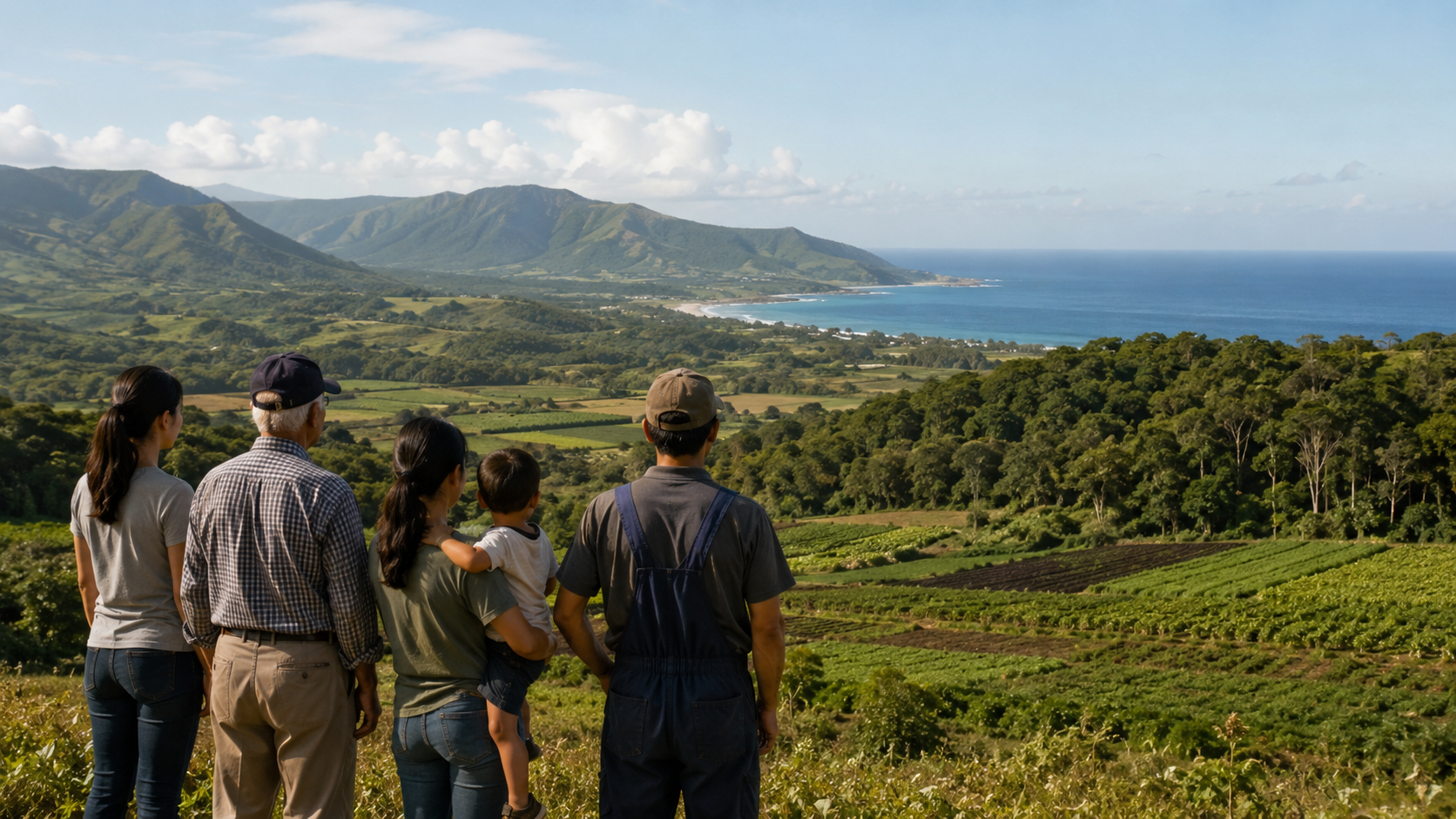
Natural Wealth Belongs to Everyone
Poverty inside a country rich in land, water, minerals, forests, seas and natural beauty is not only an economic failure. It is a moral contradiction.
No individual created the earth. No individual created the rivers, the mountains, the fertile land, the minerals under the ground, the forests, the coastline, the fish of the sea, or the natural position of a country on the map. These things existed before any private owner, before any company, before any state budget, before any political party.
And yet, in modern societies, the economic value of natural resources is often captured unequally. Some people control land and resources of great value. Others are born with nothing. They are then told that survival depends only on wages, charity, welfare programs, or the goodwill of the state.
This is not enough.
I propose a moral principle: the Equal Distribution of Natural Resource Revenue.
The idea is simple. Private ownership does not need to disappear. A person may own land, use land, cultivate land, build on land, or rent land. But when someone has exclusive control over a natural resource, they should compensate the rest of society for the natural value they exclude others from using.
This compensation would form Natural Resource Revenue. That revenue should not disappear into the general state budget. It should be returned equally to all citizens as a Natural Wealth Dividend.
This dividend would function as a safety net, even as a kind of minimum income. But its moral basis would be completely different from welfare. Welfare says: society helps those who are poor. The Natural Wealth Dividend says: every citizen receives their equal share of the natural wealth that belongs morally to all.
That distinction is important. A person receiving this dividend is not begging. He is not receiving charity. He is receiving his share.
This principle is fair because it does not punish work. It does not punish talent. It does not punish production. It does not punish someone for building a house, starting a business, cultivating land, or creating value through effort.
It asks a different question:
If a natural resource was not created by any individual, why should its value belong exclusively to the person who controls it?
The practical effects could be very powerful.
First, it would reduce poverty directly. A citizen with no land and no natural-resource ownership would still receive a share of the country’s natural wealth. A family would receive multiple shares. This would create a floor under human life. It would not make everyone rich, but it could prevent the fear of hunger, collapse, and total exclusion.
Second, it would reduce the humiliation of dependency. Many safety-net systems treat the poor as cases to be examined, approved, rejected, controlled, or suspected. A universal Natural Wealth Dividend would not need to ask whether someone is worthy. It would be a right of citizenship.
Third, it would discourage the underuse of resources. Today, someone can own valuable land and do nothing with it. They can wait while roads, cities, tourism, public infrastructure, and social development increase its value. They can store wealth passively while others struggle for survival.
With an annual charge on natural-resource value, idle ownership becomes less attractive. The owner must either use the land productively, rent it, sell it to someone who will use it, or pay society for the privilege of excluding everyone else. This does not mean destroying nature. Forests, protected areas, ecological reserves and public spaces must remain protected. The target is not nature; the target is private idleness and speculative hoarding.
Fourth, it would make private property more responsible. The principle does not abolish property. It civilizes it. It says: you may privately use what nature gave, but you cannot forget that others have been excluded from it.
Fifth, it would reduce inherited privilege. Some people are born into ownership of land and valuable natural assets. Others are born with nothing. The Natural Wealth Dividend would not confiscate inheritance, but it would prevent inherited control over natural wealth from becoming an unlimited advantage against those born outside ownership.
Sixth, it would strengthen real freedom. A person who has no minimum income is not truly free. He may be legally free, but in practice he can be forced by necessity to accept humiliation, exploitation, or destructive work. A Natural Wealth Dividend gives people breathing space. It gives them the minimum confidence needed to say no.
Seventh, it may even reduce one of the deep causes of war. Many wars, directly or indirectly, are connected to the control of land, oil, gas, water, minerals, ports, fertile regions, sea routes, and strategic territory. If humanity accepted that natural wealth must be shared rather than captured, then the incentive to conquer resources would lose much of its force.
War would not disappear completely. Human conflict has many causes: power, fear, nationalism, religion, revenge, ideology, madness. But one of the oldest material causes of war — the violent struggle for exclusive control of natural wealth — would be weakened.
The principle also changes the meaning of the state. The state should not merely be a tax collector. It should be the guardian of common natural wealth. Its duty should be to ensure that no citizen is excluded from the value of the earth under his feet, the water around him, and the natural resources of the country to which he belongs.
Of course, implementation matters. The system would need fair valuation. It should charge the natural value of land and resources, not the value created by human effort. A person should not be punished for improving land, building, planting, producing, or working. The charge should fall mainly on the natural and location value that no individual created alone.
The collected revenue must also be returned transparently and equally. If the money is absorbed by bureaucracy, corruption, political favors, or hidden state spending, the moral principle is destroyed. The dividend must be visible. Every citizen must know: this is my share of the country’s natural wealth.
The deeper aim is not only economic. It is psychological and social.
When people feel abandoned, they become afraid. When they are afraid, they become passive, angry, extreme, or desperate. But when they know that society has placed a real floor under their survival, confidence can return. And confidence is not a small thing. It can change the behavior of a whole country.
Even those who would pay more under such a system should think carefully. A society collapsing into poverty and fear is dangerous for everyone, including the wealthy. People who know how to create wealth will be able to create even more in a society that has regained stability, trust and self-confidence.
Natural wealth belongs to everyone. Private use may be allowed, but exclusive control must carry a social obligation.
The Equal Distribution of Natural Resource Revenue is not envy. It is not charity. It is not hostility toward ownership. It is the correction of a basic injustice: that some people can privately capture the value of what no private person created, while others are left with nothing.
A civilized society should begin from this principle:
Before we divide people into rich and poor, employers and workers, owners and tenants, taxpayers and welfare recipients, we must first recognize the common inheritance beneath all economic life.
The earth was not made by the landlord.
The water was not made by the investor.
The minerals were not made by the company.
The sea was not made by the state.
Natural wealth belongs to everyone.
Leave a Reply